

MCP-040 Access Control Panel
MCP-040 is a powerful multi-door access control panel designed for centralized security management. It allows organizations to control multiple doors from a single system while ensuring high reliability and scalability.
This controller integrates seamlessly with biometric devices, card readers, and security systems, making it ideal for enterprise buildings, factories, and large facilities.
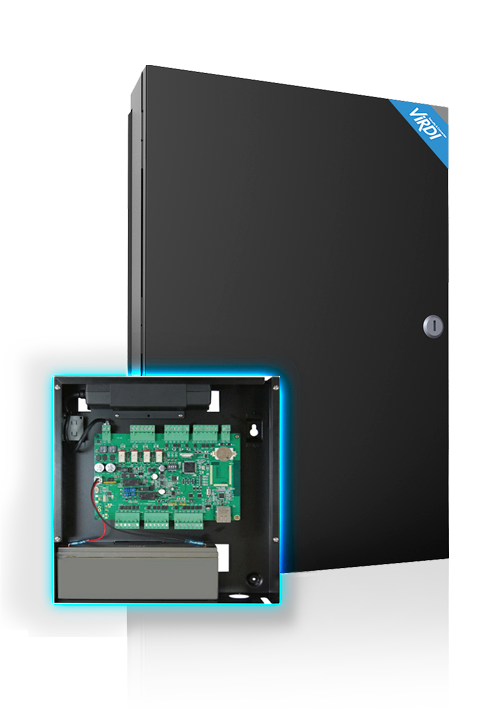
Product datasheet
Full technical specs
Access Control System Capabilities
MCP-040 provides advanced control and monitoring features for modern access control systems.
System Integration & Connection Diagram
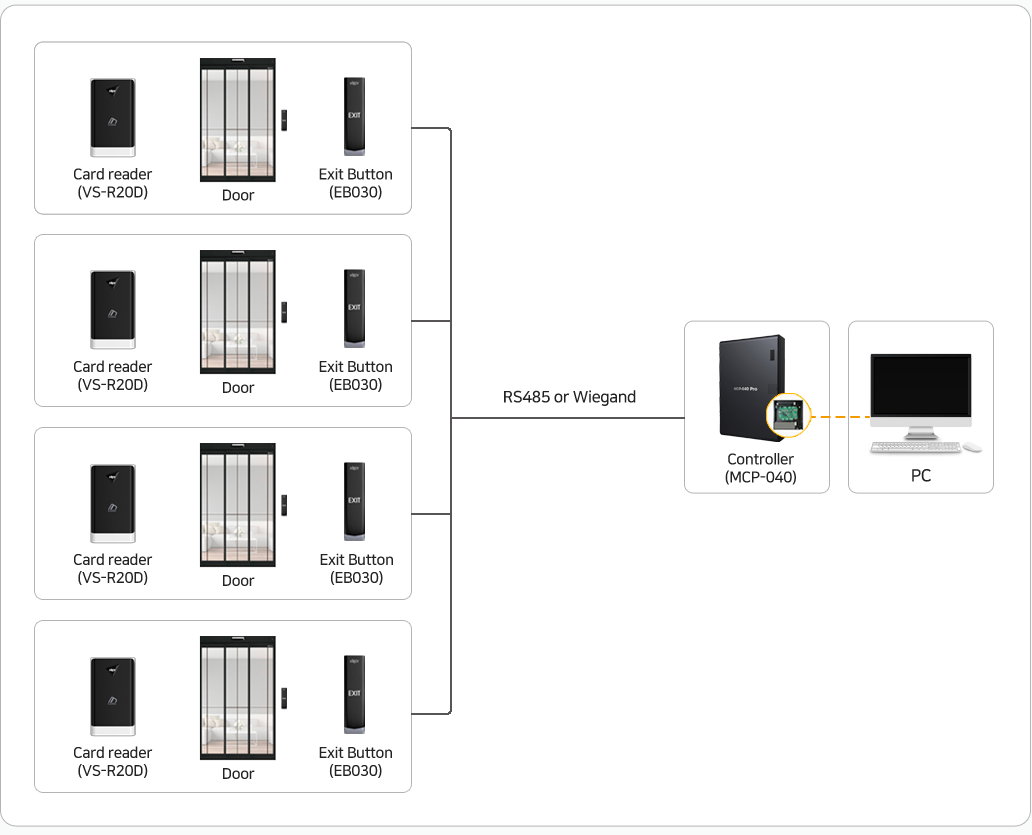
The MCP-040 connects with doors, readers, and central servers to create a fully integrated access control system.
This architecture allows centralized management, monitoring, and control of all access points within the facility.
Battery Backup & Power Reliability
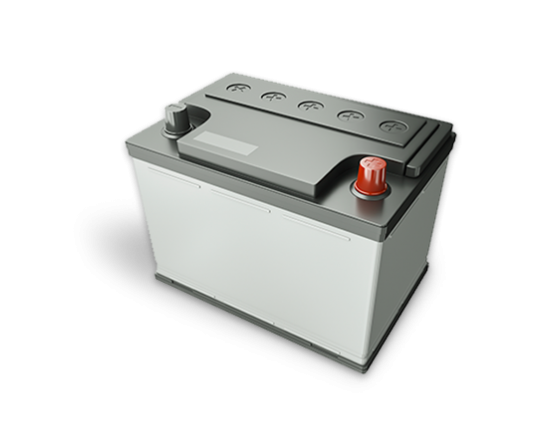
The controller supports battery backup to ensure continuous operation during power outages.
This guarantees uninterrupted access control and system stability in critical environments.
Technical Specifications of MCP-040
| Category | Details |
|---|---|
| Model | MCP-040 |
| Type | Main Control Panel – 4 Lock |
| CPU | 32Bit M3 Cortex |
| Memory | 128K SRAM / 8MB Serial Flash |
| Max Users | 50,000 Users |
| Card Capacity | Up to 50,000 Cards (5 cards per user) |
| Log Events | 51,200 Events |
| Access Groups | 1024 |
| Schedules | 255 (outputs / arm / disarm) |
| Readers Support | 8 RS485 Readers (2 per door) |
| Wiegand Input | 4 Ports |
| RS-485 | 2 Ports (19200 BPS) |
| Ethernet | 1 TCP/IP Port |
| Lock Outputs | 4 Outputs (12VDC, max 750mA each) |
| Programmable Inputs | 4 Inputs |
| Programmable Outputs | 4 Outputs (Up to 8 in v2.00) |
| Zone Inputs | 8 Zones |
| PGM Output | 12VDC Open Collector (4 / 8) |
| Power Supply | 12VDC Max 6A ±10% |
| Power Adapter | 15VDC 6A |
| Battery | RTC Lithium Backup + Battery Monitoring |
| Temperature | -20°C ~ 60°C |
| Humidity | Below 90% RH |
| Security Features | Anti-passback / Access Time Zones |
| Server Integration | UNIS Server + Built-in Web Server |
| Alarm Output | Bell / Siren Output Supported |